

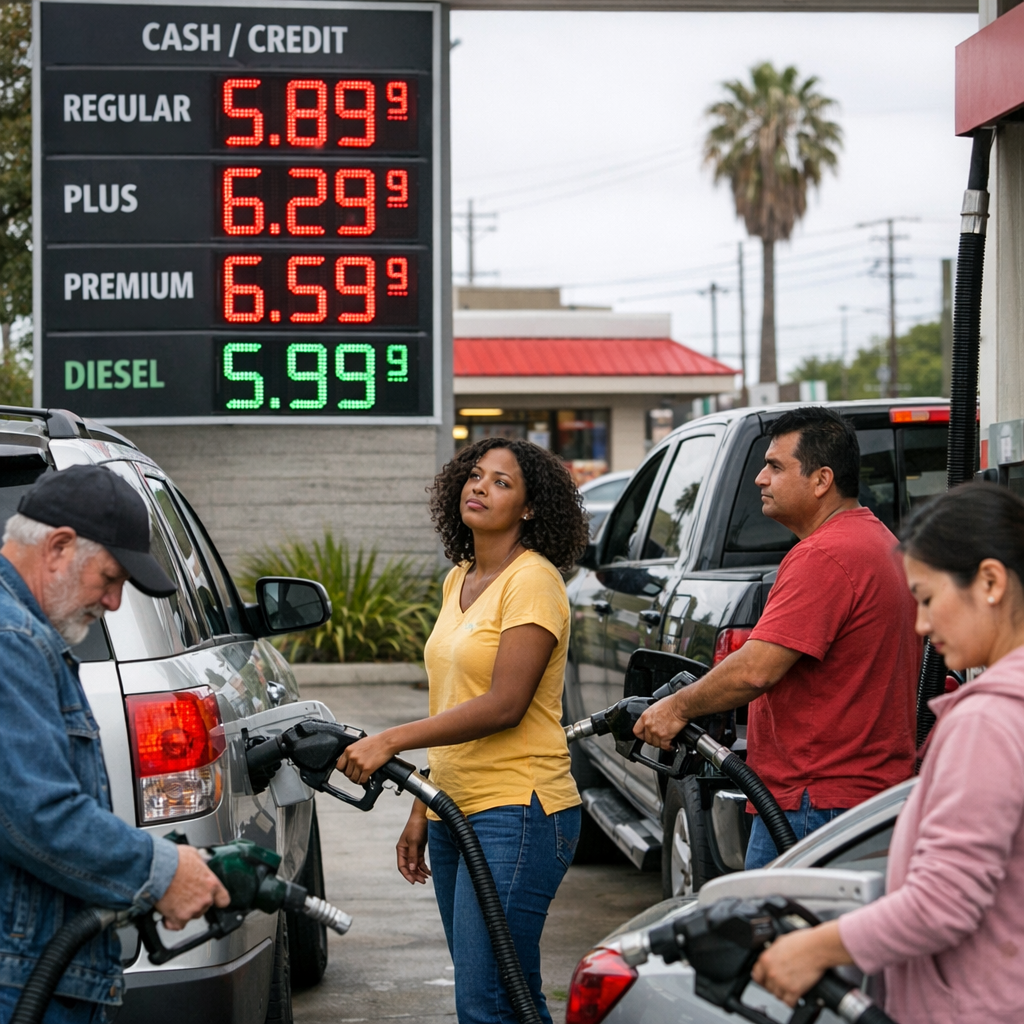
As the nation grapples with escalating inflation and surging energy prices, many Americans are expressing growing concern over their financial well-being. Recent developments have intensified these worries, prompting discussions on potential policy responses and their implications for the economy.
Inflation and Energy Prices on the Rise
Inflation has reached its highest level in nearly three years, with April’s rate climbing to 3.8%. This uptick is largely attributed to the ongoing military conflict with Iran, which began in February and led to the closure of the Strait of Hormuz—a critical passage for global oil shipments. Consequently, national average gas prices have soared above $4.50 per gallon, with some states experiencing prices exceeding $5.00 per gallon.
Public Sentiment Reflects Economic Anxiety
A recent CBS News/YouGov poll indicates that 70% of Americans feel “angry” or “frustrated” about the current economic situation. Only 11% expressed enthusiasm, while 19% reported satisfaction. Additionally, 77% of respondents noted that their incomes are not keeping pace with rising prices, highlighting the financial strain on households.
Policy Responses and Future Outlook
In response to these economic challenges, the Federal Reserve has signaled potential interest rate adjustments to curb inflation. However, concerns about the national debt, which has surpassed $38 trillion, add complexity to monetary policy decisions. Analysts warn that rising interest costs could further exacerbate budget deficits, necessitating careful fiscal management.
As policymakers navigate these turbulent economic waters, the focus remains on balancing inflation control with economic growth, ensuring that measures taken do not inadvertently hinder recovery efforts.